
How to Keep Hunting Boots Scent-Free Without Ruining the Leather

Every autumn the same argument plays out on hunting forums, and it never gets settled. One camp scrubs their boots with scent-free detergent and soaks them in scent killer. The other camp waxes their boots and swears the first camp is ruining good leather for nothing.
Both camps are half right, and that is the problem. Scent control products genuinely do strip leather. Wax and oil genuinely do carry an odor of their own. Nobody writes about the part that matters, which is how to get a leather boot clean, dry, treated and odor-neutral in time for opening morning without wrecking it in the process.
Here is what actually works, and how long it takes.
The short version
- You cannot eliminate human scent. The realistic goal is reduction, and boots matter because they leave ground scent a deer walks into later.
- Scent-elimination sprays, carbon treatments and scent-free detergents are formulated for fabric, not leather. Used repeatedly on boots they strip the oils out.
- A cured beeswax boot wax is effectively odor-neutral. Petroleum-based products and silicone sprays are not.
- Oils and waxes need time to off-gas. Treat boots at least 72 hours before you hunt, not the night before.
- Silicone waterproofing seals the pores and traps moisture inside the leather. It is the worst choice for a boot you will sweat in all day.
- Most scent gets back into boots during storage, not during treatment.

What you are actually trying to achieve
It is worth being honest about this, because the industry rarely is. A human gives off well over a thousand distinct volatile compounds, and no spray removes all of them. Even the companies selling scent control gear describe the goal as reduction and delay rather than elimination.
Boots are worth the effort anyway, and for a specific reason. Everything else you wear puts scent into the air, where it disperses. Your boots put scent into the ground, where it sits. A deer that crosses your entry trail two hours after you have walked it is reading your boots, not your jacket.
Which makes the boot the one piece of gear where the effort has a clear payoff, and also the one piece of gear made of a material that most scent-control products are not designed for.
Why scent products and leather fight each other
Leather stays flexible because of fatliquors, the oils worked into the hide during tanning. They amount to only a few per cent of the leather's weight, and they are what stop the collagen fibers from sticking together and hardening as the leather dries.
Scent-free laundry detergents and most scent-elimination sprays are alkaline surfactant systems built to lift oils out of fabric. Leather sits naturally on the acidic side. Put an alkaline degreasing product on it repeatedly and it does exactly what it was designed to do: it takes the oils out. The boot goes stiff, the grain crazes at the flex points, and eventually the stitching goes.
One wash will not destroy a boot. A season of washing before every hunt will. This is the real cost hunters are paying without realizing it, and it is why so many people end up replacing boots every couple of years and assuming that is normal.
Which treatments are actually odor-neutral
The useful question is not whether a product smells in the tin. It is whether it still smells once it has cured into the leather.
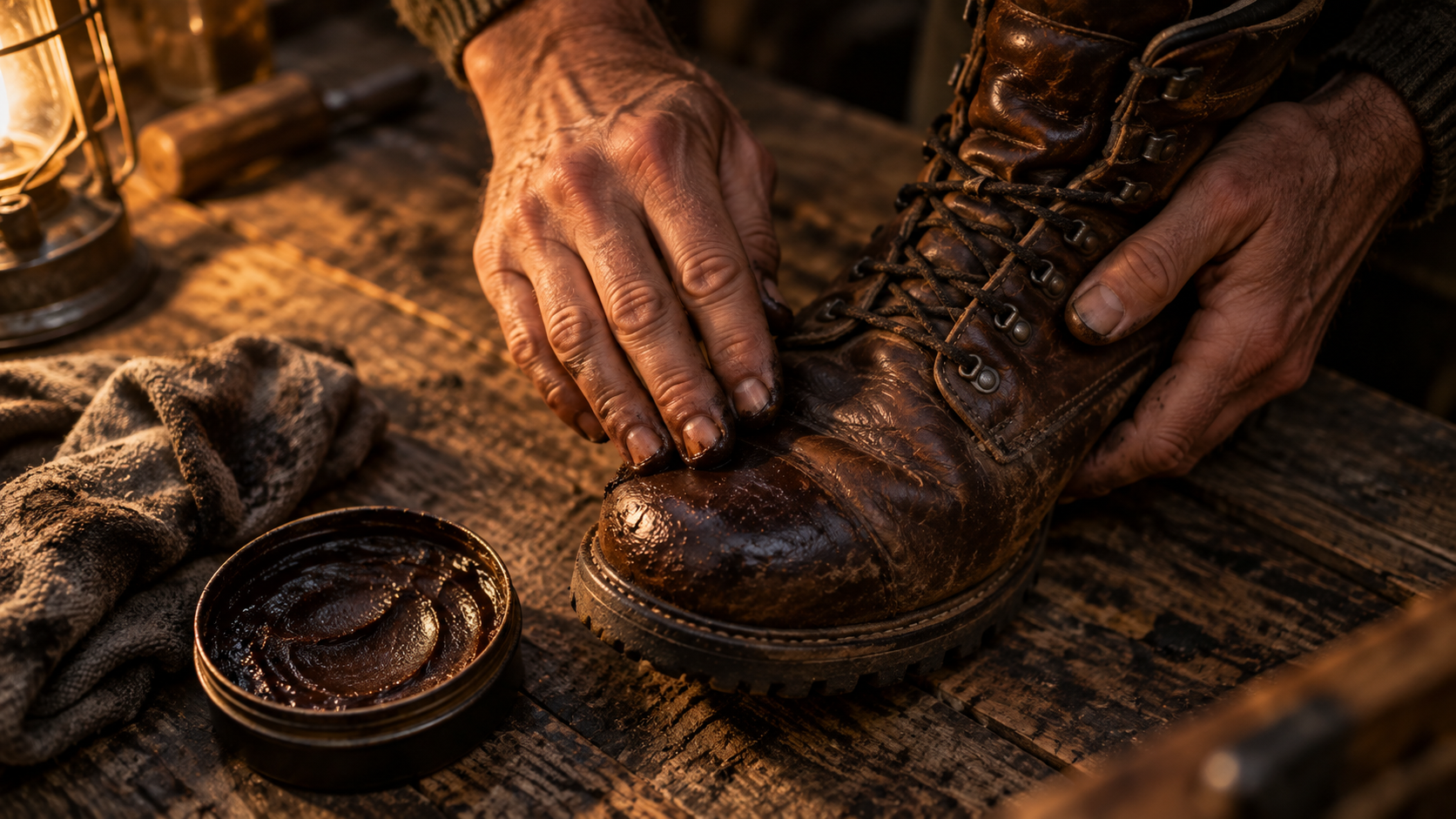
Beeswax-based boot wax is the best answer available. Once it has been worked in and left to cure, it is effectively neutral, and it adds water resistance without sealing the leather. Our Boot Wax Waterproofer & Conditioner is the product to reach for here.
Mink oil carries a faint animal-fat odor that fades within about 48 hours. It softens and darkens leather considerably, which is fine on a work boot and a question of taste on a hunting boot.
Neatsfoot oil is mild and fades in around 72 hours, but it penetrates and softens deeply. It belongs on a boot you want flexible, not a boot you want supportive. We wrote about where it does and does not belong in What Is Neatsfoot Oil?
Saddle soap is mild once rinsed, but it is a cleaner, not a conditioner, and overuse strips oils. Use it to clean, then put the oils back.
Silicone spray is the one to avoid outright. It carries a chemical odor that lingers, and worse, it forms a film that seals the leather's pores. Your foot sweats all day into a boot that cannot breathe out. You end up with trapped moisture, bacterial growth and, eventually, a boot that smells far worse than anything you were trying to prevent.
Cleaning boots without stripping them
Mud is the thing people get wrong. The instinct is to hose it off while it is wet. The better move is to let it dry and knock it off, because dried mud comes away mechanically and wet mud gets driven into the grain by water pressure.
- Let it dry, then brush. A stiff brush and a few minutes gets most of it. A Heavy-Duty Boot & Cleat Brush is built for exactly this.
- Wash with unscented soap and cool water. Not detergent. Not scent-killer soak. A cloth, not a hose.
- Dry slowly, away from heat. Room temperature, good airflow, newspaper inside if they are soaked. No fire, no radiator, no boot dryer on high. Heat is what turns a wet boot into a shrunken, cracked boot.
- Put the oils back. A thin coat of wax or Leather Boot Oil Conditioner, worked in by hand so your body heat helps it penetrate.
Note the order. Cleaning removes oils. If you clean and stop there, you have made the boot worse, not better.
The 72-hour rule
This is the part almost nobody accounts for. A freshly waxed boot is not scent-neutral. It becomes scent-neutral once the wax has cured and the volatiles have gassed off.
Treat your boots at least three days before you plan to hunt, and leave them somewhere with airflow while they cure. Waxing the night before and heading out at dawn puts you in the woods wearing the one thing you were trying to avoid.
The same applies to oils, which need roughly the same window. Plan boot care at the start of the week for a weekend hunt, and the problem solves itself.
Where scent actually gets back in
You can do everything right and undo it in storage. A hall closet puts your boots next to cooking, laundry detergent and everything else a house smells of. A heated garage adds fuel and exhaust, and the dry heat pulls moisture out of the leather.
A sealed tote is the standard answer, and it is right, with one condition: the boots must be completely dry going in. Seal a damp boot in a plastic tote and you have built an incubator. Mildew will do more damage to that boot than a season of hard wear.
The best version is a sealed tote somewhere cold and dry, like an unheated shed, with the boots fully dried first. Cold slows chemical degradation of the leather as a bonus.
Five mistakes that cost people boots
- Washing with scent-free laundry detergent. It is built to strip oils from fabric and it does the same thing to leather.
- Drying boots with heat. Wet leather shrinks at temperatures a boot dryer or a fire can easily reach. Once it shrinks it does not come back.
- Reaching for silicone spray because it says waterproof. It seals the pores, traps sweat, and holds a chemical odor.
- Treating boots the night before. Everything needs to cure. Three days.
- Storing boots damp in a sealed tote. Scent-free and mildewed is not a win.
Rubber versus leather, honestly
Rubber boots hold less scent. That is simply true, and it is why a lot of serious whitetail hunters wear them on the walk in. Rubber has no pores to absorb sweat and no oils to strip.
What you give up is support, fit and warmth, and on rough ground over a long season that matters. There is no universally right answer. If your hunt is a short walk to a stand over flat ground, rubber is the easier call. If you are covering miles of broken country, a properly maintained leather boot is worth the extra care, and the care is not difficult once it is on a schedule.
Frequently asked questions
Will scent-elimination spray ruin my leather boots?
Not from one application. Used before every hunt across a season, yes, it will dry them out. If you are going to spray anything, spray the fabric parts and treat the leather separately.
Does boot wax smell to deer?
Beeswax-based wax is effectively neutral once cured. The smell you notice in the tin is gone from the boot after about 72 hours.
How long before a hunt should I treat my boots?
Three days. That covers both wax and oil, and it is the single easiest improvement most hunters can make.
Can I use mink oil on hunting boots?
Yes. It conditions well and the faint odor fades in about two days. Expect it to darken the leather noticeably.
Why do my boots smell worse after I waterproofed them?
Almost always silicone. It seals the leather so sweat cannot escape, and trapped moisture breeds the bacteria that cause odor.
Is it worth storing hunting boots in a sealed tote?
Yes, provided they are bone dry first. Damp boots in a sealed tote grow mildew, which damages leather far faster than ordinary wear.
Conclusion
Scent control and leather care are usually treated as separate problems, and that is why hunters end up doing one at the expense of the other. They are the same problem. A boot that has been stripped of its oils absorbs more of everything, including you.
Clean it dry, wash it gently, put the oils back, give it three days, and store it cold and sealed. That routine takes about twenty minutes of actual work spread across a week, and it will keep a good pair of boots going for years instead of seasons.
Recommended products
- Eagle Boot Wax Waterproofer & Conditioner — beeswax-based, odor-neutral once cured
- Eagle Leather Boot Oil Conditioner — for boots that have gone dry
- Eagle Heavy-Duty Boot & Cleat Brush — for dried mud, before any water
- Eagle 3-Piece Saddle Soap Kit — for a proper clean at end of season
- Eagle Leather Boot Care Kit — the full routine in one box
Related reading: How to Waterproof Leather Boots Before Winter and 7 Things People Put on Leather That Ruin It.
